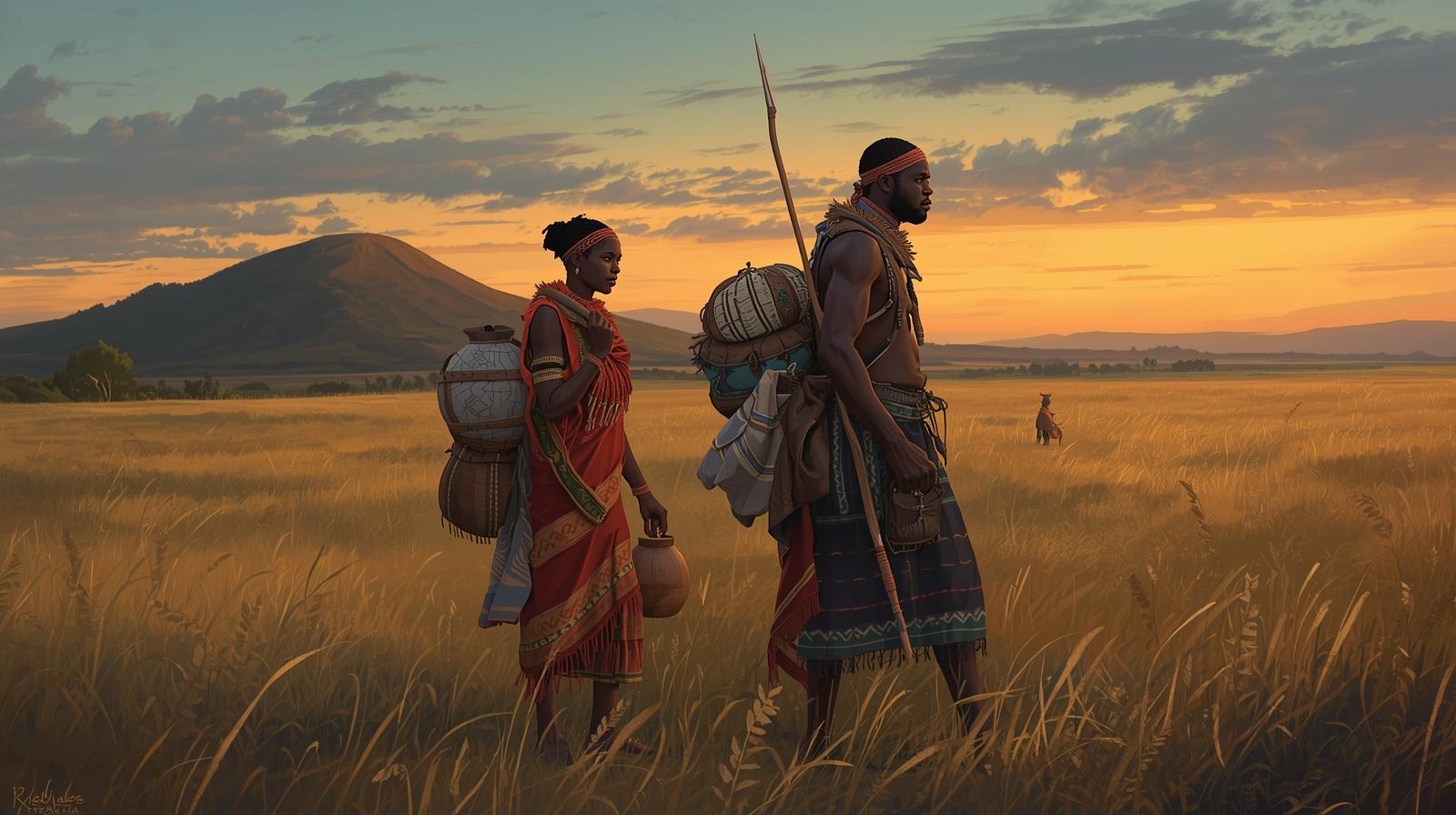
According to the Kikuyu myth of origin, a supernatural being known as Ngai, or Mwene Nyaga, who resides in Kĩrĩnyaga (Mt. Kenya), created the first man and woman, known as Gĩkũyũ and Mũmbi, respectively. The myth posits that one day Ngai gave Gĩkũyũ the fertile land between Mount Kenya (Kĩrĩnyaga), the Kĩrĩmambogo Hills (Kĩanjahĩ), the Ngong Hills (Kĩrĩmbirũ-irũ), and the Aberdare Ranges (Mĩtabũrũko ya Nyandarua). After inheriting the land, Gĩkũyũ and Mũmbi descended from the mountains and settled in Mũkũrwe wa Nyagathanga. The couple was blessed with nine daughters, namely Wanjirũ, Wambũi, Wanjikũ, Waceera (Njeri), Wangari, Wakĩũrũ (Nyambura), Wangechi (Waithĩra), Wairimũ, Wangũi (Waithiegeni), and Wamũyũ (Warigia/Wanjũgũ).
When the daughters were of marriage age, Gĩkũyũ sacrificed and prayed under a fig (mũgumo) tree, requesting Ngai to provide husbands to his daughters. The following day, nine men appeared under the Mũgumo and married his daughters, giving rise to the nine Kikuyu clans. The nine clans were named after each daughter and form the foundation of the Kikuyu heritage. These clans are Anjirũ, Ambũi, Anjikũ, Aceera, Angari, Akĩũrũ, Aithĩrandu, Agathigia, Angũi/Aithiegeni, and Aicakamũyũ.
A notable discrepancy in the Agikuyu myth of origin is the intentional reference of the daughters and clans as the nine, when in reality the actual count is ten. This discrepancy has led to various interpretations and debates among scholars and historians regarding the true origins of the Kikuyu people. Narrations from the elders depict a “Kenda mui-uru” counting theory, assuming it is an omen to count all your blessings, equating it to bragging to Ngai (kuonia ngai nda). Another school of thought from elders is that the discrepancy arises from the “mirongo counting method,” where counting was done up to nine and the 10th was put aside to present the counts.
Another divergent view on the origin of the discrepancy suggests that it may have been intentionally created as a way to preserve cultural knowledge and traditions within the Kikuyu community. This theory posits that the discrepancy in counting serves as a symbolic reminder of the importance of oral history and storytelling in passing down ancestral wisdom from generation to generation.

Follow and share Us